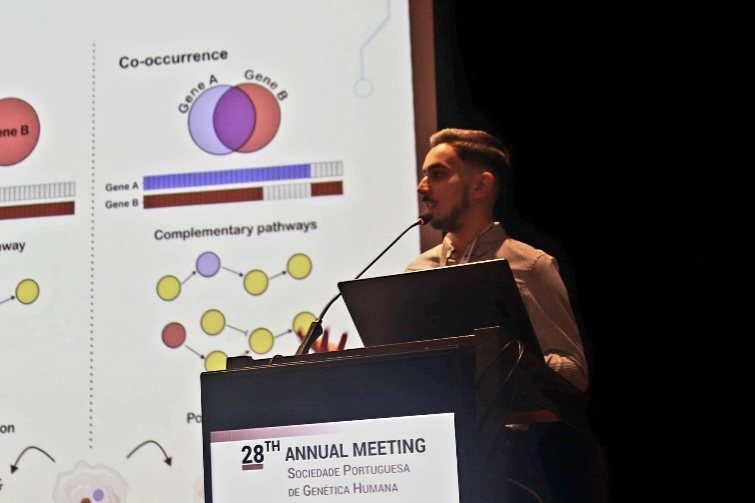
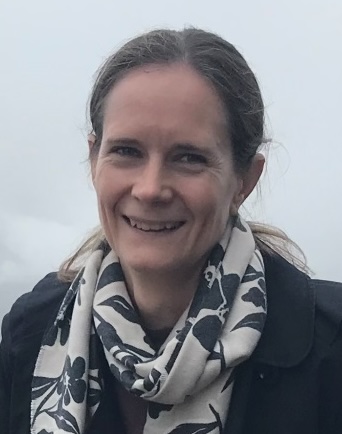
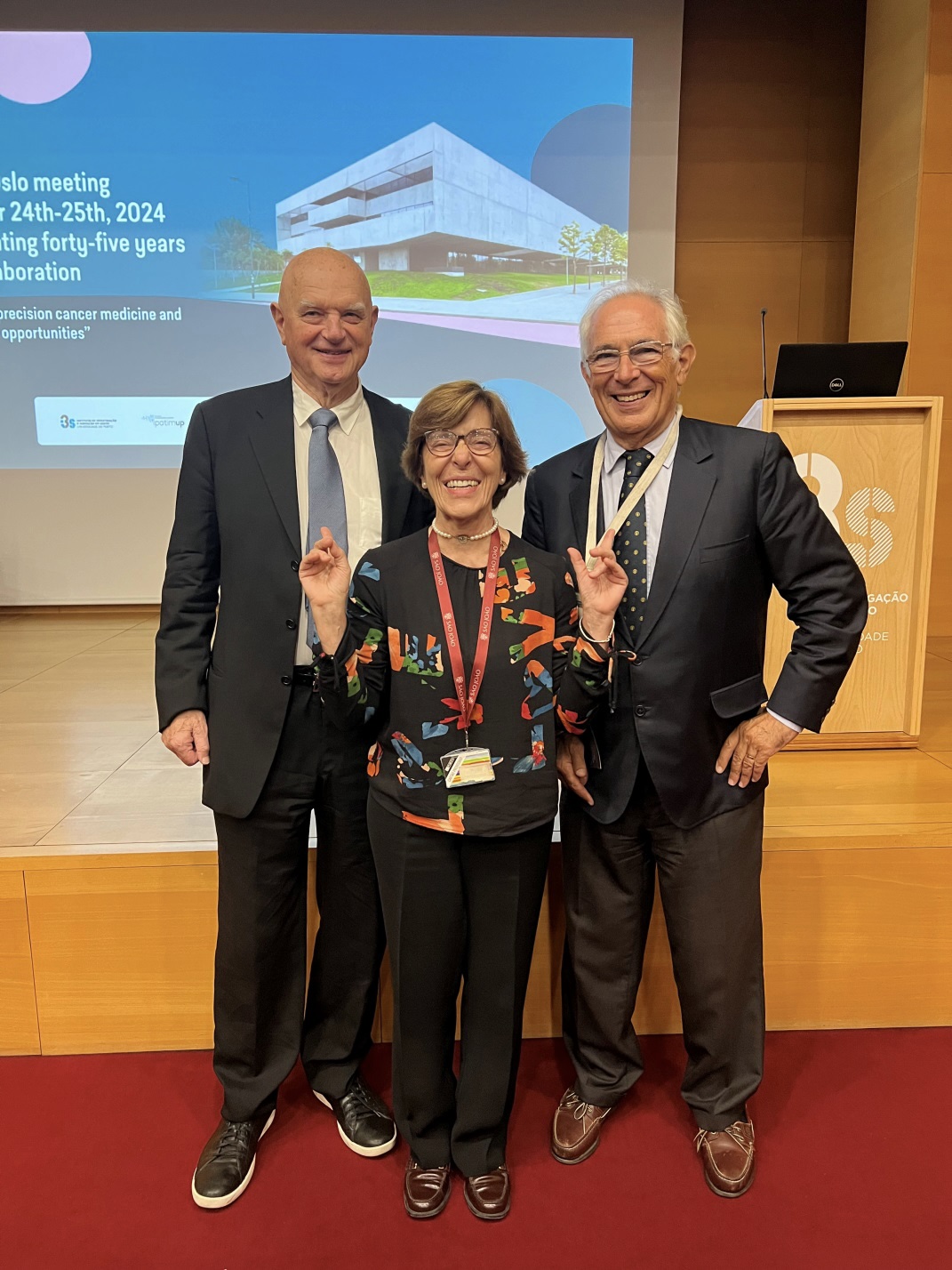
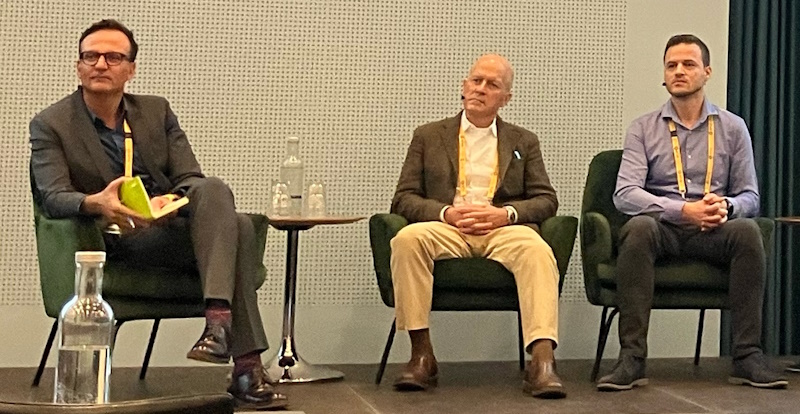
A new research letter published in JAMA Network Open shows that colorectal cancer has become the leading cause of cancer-related death among adults younger than 50 years in Norway. Anita Sveen and Luis NunesLuís Nunes, researcher in the Computational Oncology group led by Anita Sveen, is first author of a research letter examining trends in cancer mortality among people aged 20-49 years in Norway. Overall, the findings are encouraging, as cancer mortality has decreased by more than half among young adults since 1996. Significant declines were reported for the major cancer types.
The project group leaders Edward Leithe and Kushtrim Kryeziu have supervised three MSc students who all successfully defended their theses in June. They were students at the Department of Biosciences, University of Oslo, and their experimental MSc works were fully performed in the Lothe lab.
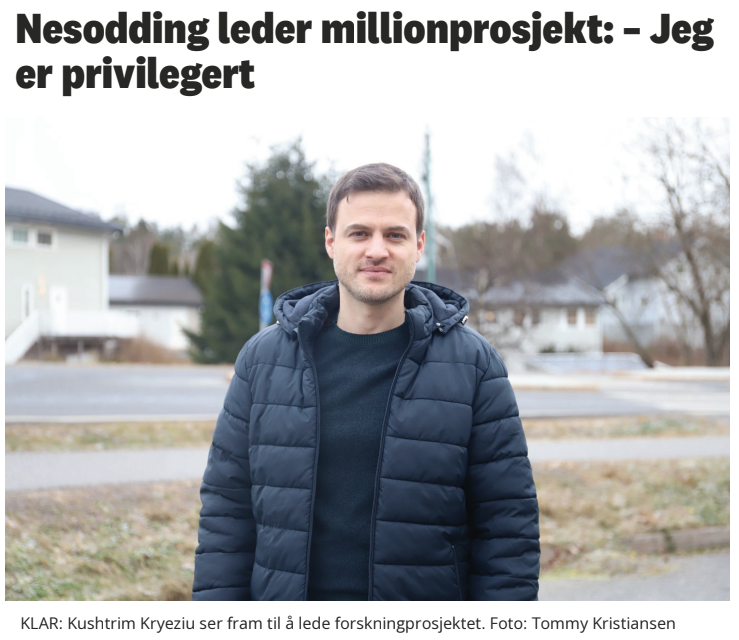
Kushtrim Kryeziu, leader of the "Functional precision oncology" project group at the Department Molecular Oncology, is first author on a recent article in Cell Reports Medicine, entitled "Patient-derived organoids from metastatic colorectal cancer mirror tumor heterogeneity and predict patient survival and drug sensitivity". "This study is a milestone for our organoid lab," says Dr. Kushtrim Kryeziu, announcing the establishment of a living biobank comprising 213 patient-derived organoids from colorectal cancer liver metastases. "Created in close collaboration with researchers at our department and various clinical departments at OUS, the study details an in-depth pharmacogenomic analysis of tumor heterogeneity."
During this year's annual innovation celebration, Inven2 brought forward researchers and innovations that demonstrate how research from the University of Oslo and Oslo University Hospital can be developed into solutions with significant value for patients, business and society. Three awards were presented during the celebration: the Innovation Award 2026, the Innovator of the Year and the Audience Award. The Innovator of the Year 2026 award went to Professor Guro Elisabeth Lind, head of the Epigenetics Group at the Department of Molecular Oncology at the Institute for Cancer Research, Oslo University Hospital.
Hege Marie Vedeld and colleagues at Oslo University Hospital have identified a panel of DNA methylation biomarkers capable of accurately detecting bile duct cancer (cholangiocarcinoma) in bile samples up to a year before clinical diagnosis – offering new hope for earlier intervention in individuals with the chronic liver disease primary sclerosing cholangitis (PSC). The findings is a collaboration between the Norwegian PSC Center, and the Lind lab and were recently published in JHEP Reports.
A collaborative clinical study (PI: Tormod K. Guren) at OUS reports a long-lasting response to immune check point inhibition in 1 of 8 patients with malignant peripheral nerve sheath tumors (MPNSTs). Multiplex fluorescent immunohistochemistry showed high tumor density of PD-1+CD8+ T cells in tumors with treatment response. In addition, mixed response in a 2nd patient was associated with high PD-L1 expression. This study was possible due to a dedicated multidisciplinary collaboration across divisions at OUS, and was recently published in npjPrecision Oncology by Sveen A, Bergsland CH, Niederdorfer B, Berstad AE, Bjerkehagen B, Boye K, Guren TK and Lothe RA.
Christian Kranjec and Ina Eilertsen, researchers in the Lothe lab are shared 1st and corresponding authors presenting mutation profiles of > 100 colorectal cancer cell lines. Authentication is shown by an STR profile for each cell line. Mutation data includes classifications of pathogenicity, variant allele frequencies and illustrations of the mutation distribution along the length of encoded proteins.
The study is a resource to guide selection of cell lines for functional studies of colorectal cancer and has received interest already by > 1500 accesses the first 14 days after publication.
Training and supervision of students has over time been a key focus for the Department of Molecular Oncology, recently acknowledged in the Evaluation of Medicine and Health 2023-24 conducted by the Research Council of Norway.
This year four Master students defended their degrees at four different academic institutions.
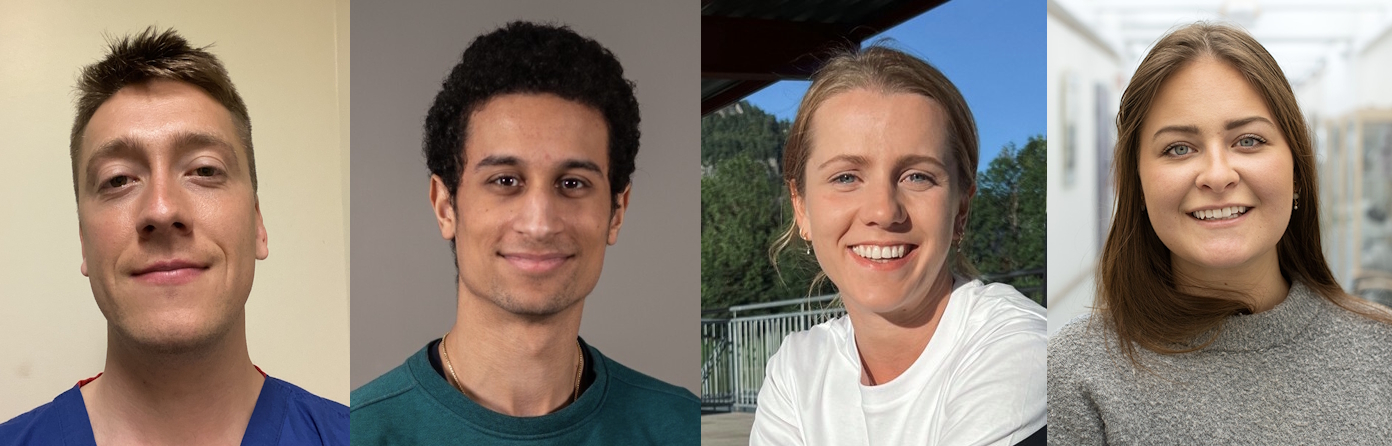
Kristofer G. Taylor, Naser Abdelmaguid, Helene Rønningen, and Dina G. Bergmann.
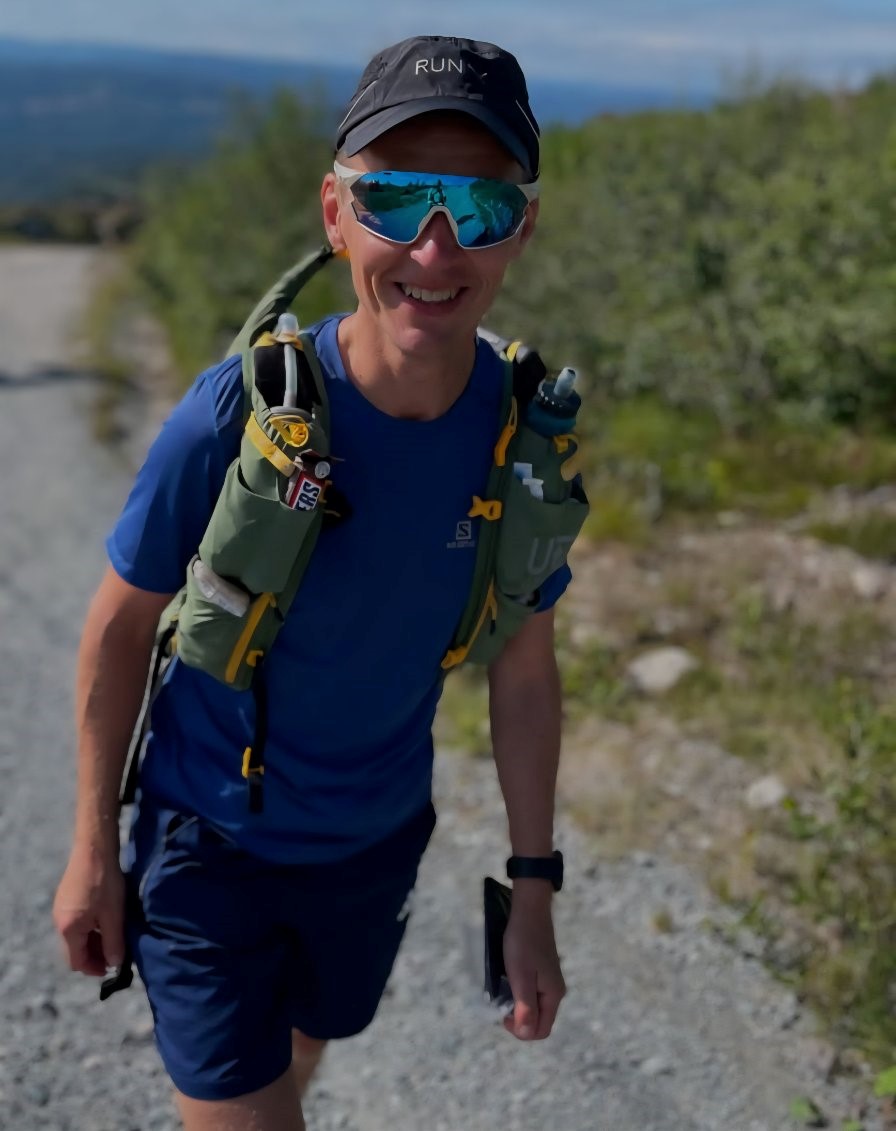
Group leader Rolf I. Skotheim in the Department of Molecular Oncology has spent the last week running from Oslo to Bergen, completing the 500 km ultra race Oslo-Bergen Trail.
The Oslo-Bergen Trail is regarded as a highly challenging endurance event, where participants traverse a variety of forest and mountain terrains in hopes of reaching Bergen after several days. The race was organized for the first time in 2021 and has gained popularity and established itself as one of the most extreme ultra-challenges in Scandinavia.
The race is open for both individual participants and teams consisting of 2-3 participants. A total of 213 participants had signed up for the race, which started in Oslo on July 3rd, and approximately 50% were able to complete the race.
The establishment of new groups in Computational Oncology and Cancer Informatics is in line with the ICR strategy to strengthen efforts in systems cancer biomedicine and integrate such competence at the departmental level. It is also in line with the Department’s long-term strategy to recruit senior scientists with complementary competencies, serving our joint research goals.
Kjæstad E, Thiis-Evensen E, Sveen A, Bakka AO, Schultz JK(2026) Small Bowel Cancer: Implications of Preoperative Work-Up on Surgical Strategy World J Surg(in press) DOI 10.1002/wjs.70547, PubMed 42693594
Sveen A, Stenersen JM, Asenso TQ, Klokkerud SK, Kranjec C, Eilertsen IA, Johannessen B, Leithe E, Kryeziu K, Zucknick M, Lothe RA(2026) Exceptional treatment responses and molecular markers among 103 colorectal cancer cell lines Mol Biomed, 7(1) DOI 10.1186/s43556-026-00551-z, PubMed 42640371
Totland MZ, Rasmussen NL, Elster VCW, Arnesen KI, Bergmann DG, Bergill I, Stenersen JM, Larsen M, Moe JJ, Basing S, Sørensen V, Aasen T, Leithe E(2026) Regulation of ubiquitination and degradation of the gap junction channel protein Connexin43 involves the concerted action of multiple members of the NEDD4 family of E3 ubiquitin ligases Cancer Lett, 659, 218796(in press) DOI 10.1016/j.canlet.2026.218796, PubMed 42641867