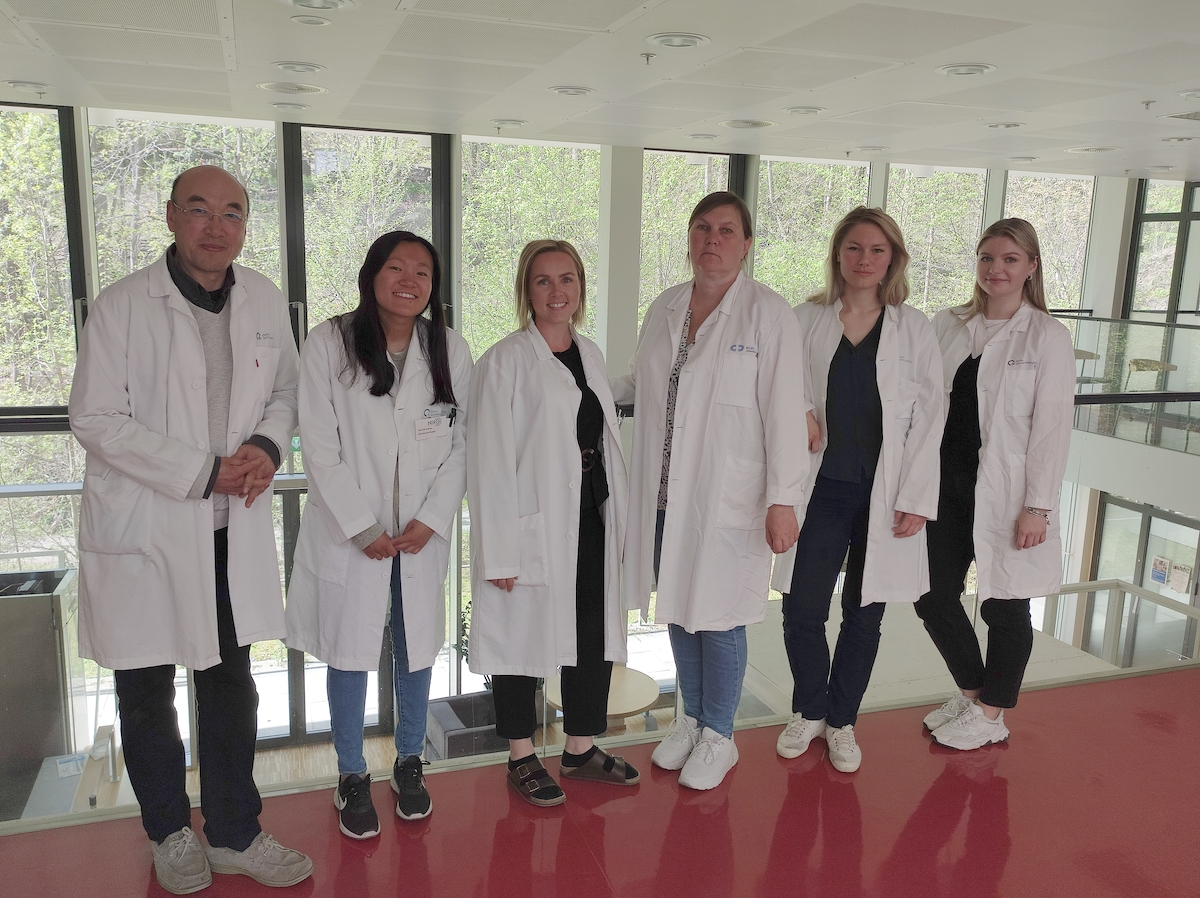
Biophysics and PDT Group
Our group is working with basic biophysical and photobiological science, as well as with related medical applications. Three main fields are central for us:
Solar radiation and vitamin D
We are studying the photobiology of vitamin D formation in human skin, skin carcinogenesis, folate degradation and penetration of ultraviolet radiation (UV) into human skin.We concentrate on translational work, and on clinical applications in cooperation with other groups of experts in physics, biology, physiology, oncology and epidemiology.
Our work on the relation between vitamin D status and cancer prognosis is widely and internationally recognized.
Skin photobiology
We studied several important aspects of skin photobiology: liberation of neuroactive substances (NO, CO) in blood and photodegradation of folates. Our findings can be clinically applied as well as elucidate the development of human skin colors. Optical methods for non-invasive skin diagnosis are being developed together with the company Balter Medical Inc (PhotoSense AS).
Penetration of UV radiation (UVA and UVB) through the atmosphere and into human tissue. This work is a combination of measurements (reflectance spectroscopy) and calculations. Cooperation with Dept. of Physics, Oslo University.
Photodynamic therapy (PDT) of cancer.
Our PDT work is focused on the use of derivatives of 5-aminolevulininc acid (ALA), heme precursors, other photosensitizers (phtalocyanines, hypericin, chlorine and bacteriochlorine derivatives) and improving therapeutic procedures (decreasing pain and erythema during PDT). We study the fundamental mechanisms behind tumor localization and mechanisms of action of the drugs. Pharmacocinetisc, stability, tissue penetration of the drugs and role of pH for drug localization are under investigation. Experiments with cells in vitro and animals in vivo are conducted. The photosensitizers are also being tested for use in fluorescence diagnosis (FD). Non-invasive spectroscopic methods (fluorescence, light reflectance and scattering) and fluorescence microscopy, cell survival, tumour growth analysis and several other methods are applied in our research.
We also investigate how light can be used for diagnosis and cowork with the company Balter Medical Inc (PhotoSense) and Prof. Stamnes group at the University of Bergen.
Our group is cooperating internationally with a number of research groups from Physics Institute in Bergen (Norway), Innovaderm Research Inc. (Canada), Centre Alexis Vautrin in Nancy (France), Bar Ilan University (Israel), Padova University (Italy), Vilnius University (Lithuania), Rostov-on-Don University (Russia), University Hospitals in Örebro and Gothenburg (Sweden), Leeds University (UK), Queens University Belfast (UK) and Institute of Photobiology in Minsk (Belarus).
Students, doctoral (Ph.D.) students, postdocs as well as guest researchers are always welcome to join our group for various research projects.
NB! For full overview over our activities see the group's publication list and presentations (lectures and internet articles).
In 2003 the group leader recieved the "Norsk Hydro Birkeland award in physics", and is from 2007 a member of ''The Royal Norwegian Academy of Sciences and Letters'' in Trondheim and ''The Norwegian Academy of Science and Letters'' in Oslo.
Jun 14, 2013
International approaches to personalized cancer medicine
Jun 5, 2013
Latest publications
Johan Moan
Increase in serum 25-hydroxyvitamin-D3 in humans after sunbed exposures compared to previtamin D3 synthesis in vitro
J Photochem Photobiol B, 122, 32-6
PubMed 23591142
Effect of vitamin D supplementation and ultraviolet B exposure on serum 25-hydroxyvitamin D concentrations in healthy volunteers: a randomized, crossover clinical trial
Br J Dermatol (in press)
PubMed 23551243
Cutaneous malignant melanoma incidence rates in Norway
Scand J Public Health, 41 (4), 336-9
PubMed 23439631
More publications


Print this page